
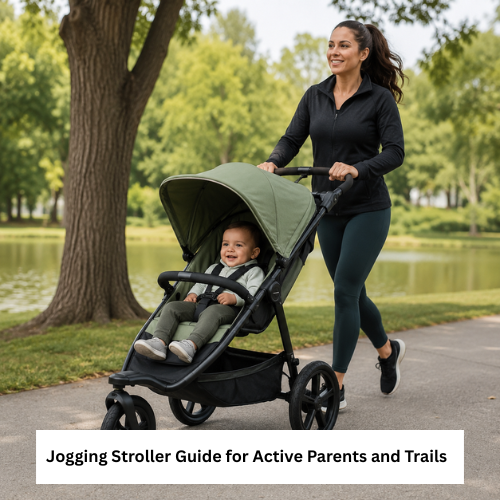
A jogging stroller can help active parents enjoy outdoor walks, paved paths, and fitness routines while keeping baby mobility practical. The right jogging stroller should match your child’s age guidance, terrain, wheel design, suspension, brake system, handle comfort, and storage needs.
A jogging stroller is different from a basic everyday stroller because it is usually built for smoother movement over longer distances and outdoor surfaces. Still, parents should verify manufacturer guidance before jogging, especially for infants and younger babies.
Why Active Parents Choose Jogging Strollers
A jogging stroller can support outdoor routines, park walks, fitness goals, and active family schedules. It can also be useful for uneven sidewalks, longer routes, and families who prefer larger wheels.
The right model should feel stable, easy to steer, and appropriate for the surfaces you use most often.
How to Choose a Jogging Stroller
A jogging stroller should be selected by wheel type, suspension, child fit, brake design, handle height, fold style, and terrain needs. Do not choose only by sporty appearance.
Before buying, check:
- Age and weight guidance
- Front wheel lock or swivel mode
- Rear wheel size
- Suspension design
- Harness system
- Brake type
- Handle comfort
- Canopy coverage
- Folded size
- Return policy
| Feature | Why It Matters | Best For | Limitation | Verify Before Buying |
| Three wheel stroller design | Helps outdoor handling | Active walks and smoother turns | Larger footprint | Folded size and trunk fit |
| Locking front wheel | Adds stability for jogging | Straight paths | Less flexible turning when locked | Wheel mode instructions |
| Stroller suspension | Helps reduce bumps | Uneven sidewalks and parks | Varies by model | Terrain guidance |
| Hand brake | Adds control on slopes | Hilly areas | Not always included | Brake type and placement |
| Large canopy | Sun and wind coverage | Outdoor baby stroller use | Coverage varies | Canopy size and ventilation |
Running Stroller vs Everyday Stroller
A running stroller should be designed for active movement, while an everyday stroller is usually designed for errands and general mobility. Not every stroller with three wheels is suitable for jogging.
A running stroller should be checked for wheel stability, manufacturer jogging guidance, harness quality, brakes, and terrain use before buying.
If a product does not clearly state jogging suitability, verify before buying or use it only for walking.
All Terrain Stroller for Outdoor Routes
An all terrain stroller can be helpful for parks, sidewalks, gravel paths, and bumpy surfaces. It may offer larger wheels and better movement than small travel strollers.
An all terrain stroller should be matched to the surfaces you use most, such as paved paths, grass, light gravel, or city sidewalks.
For product comparison, review jogging stroller options and verify age guidance, wheel design, suspension, brake system, folded size, and return policy before buying.
Stroller for Jogging Safety Checks
A stroller for jogging should not be used before the child meets the manufacturer’s age and development guidance. Parents should also ask a pediatrician if they are unsure.
A stroller for jogging should include a secure harness, stable wheel setup, working brakes, and clear manufacturer instructions.
Avoid rough paths, high speeds, or unsafe slopes if the stroller is not designed for them.
Three Wheel Stroller and Suspension Notes
A three wheel stroller may feel easier to guide outdoors, but wheel lock, alignment, and suspension matter. A front swivel wheel can help with walking, while a locked wheel may be recommended for jogging depending on the model.
A three wheel stroller should be checked for wheel mode, tire type, turning control, and trunk fit.
A stroller suspension system can improve comfort on uneven surfaces, but parents should still avoid harsh terrain and follow product guidance.
Outdoor Baby Stroller Setup Tips
An outdoor baby stroller prepared before each route. Check tires or wheels, brakes, canopy, harness, and storage load.
An outdoor baby stroller setup should include sun protection, water, weather awareness, and a safe route plan.
At online baby strollers, parents can compare jogger baby strollers, travel systems, stroller accessories, and outdoor baby gear for active family routines.
Cleaning and Maintenance Advice
Jogging strollers may collect more dirt than indoor or shopping strollers. Regular checks help keep them safe and smooth.
Maintenance tips:
- Clean wheels after outdoor use
- Check brakes before every outing
- Inspect harness straps
- Tighten loose parts if instructions allow
- Keep tires or wheels clear of debris
- Wipe the frame and fabric as directed
- Store the stroller dry
- Replace worn parts when needed
Common Buying Mistakes
Avoid these mistakes:
- Assuming every three-wheel stroller is for jogging
- Ignoring child age guidance
- Not checking folded size
- Forgetting brake type
- Choosing small wheels for rough routes
- Skipping suspension checks
- Buying without checking return policy
Troubleshooting Jogging Stroller Problems
If the stroller pulls to one side, check wheel alignment, tire pressure if applicable, and surface conditions. If the ride feels rough, the stroller may not match the terrain or suspension needs.
If brakes feel weak or uneven, stop using the stroller until the issue is check according to the manufacturer instructions.
Practical Buying Checklist
Before buying, confirm:
- Size or fit: Stroller fits child size, route type, trunk space, and storage area
- Compatibility: Works for walking, jogging if allowed, outdoor use, and family routine
- Safety: Harness, brakes, wheel lock, canopy, and manufacturer age guidance are clear
- Material or build quality: Frame, wheels, suspension, fabric, and handle look reliable
- Setup or installation: Folding, wheel mode, braking, and harness steps are clear
- Maintenance: Wheel cleaning, brake checks, and storage are manageable
- Warranty: Verify before buying
- Return policy: Check before ordering
- Replacement parts: Verify wheels, tires, tubes, brakes, canopy, harness, or adapters if listed
- Delivery or support: Confirm shipping timing and support options
- Verify before buying: Do not assume jogging approval, infant compatibility, terrain safety, or included accessories
Conclusion
A jogging stroller should support active routines with stable wheels, reliable brakes, good suspension, clear age guidance, and a comfortable child setup. Compare all terrain stroller features, wheel design, storage, and safety instructions before choosing a jogging stroller for active parenting.
FAQ
Can any stroller be used for jogging?
No. Use only a stroller that the manufacturer says is suitable for jogging.
What features matter most in a jogging stroller?
Check wheel stability, harness, brakes, suspension, handle comfort, canopy, and age guidance.
Is a three wheel stroller always a jogging stroller?
No. Some three-wheel strollers are for walking only, so verify manufacturer guidance.
Can infants ride in jogging strollers?
Follow the product’s age guidance and ask a pediatrician if unsure before jogging with an infant.
What should I verify before buying?
Verify jogging approval, age guidance, brakes, wheel design, suspension, folded size, warranty, and return policy.
